
Old Cairo Coptic Quarter: A Walking Order That Actually Works
By Panda Travel Egypt Published Reviewed by Ahmed Abdelmawgoud 7 min read
A sight-by-sight walking order for the Old Cairo Coptic Quarter, how long it really takes on foot, and how it pairs with the Egyptian Museum in Tahrir Square.
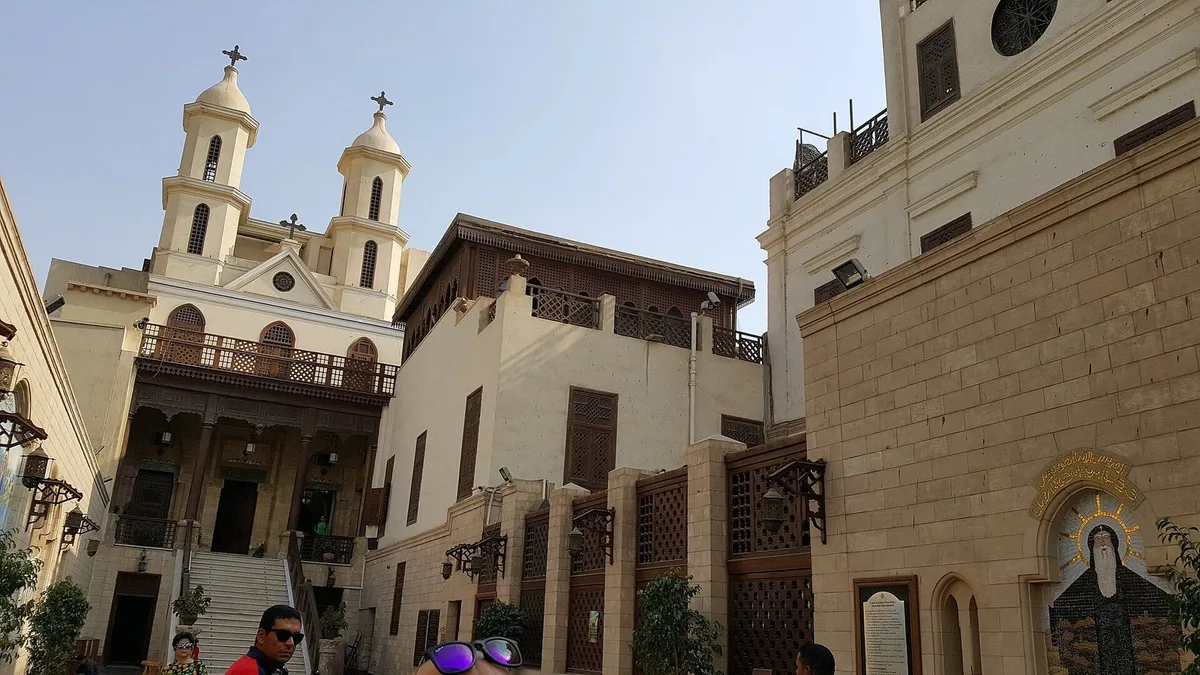
The Old Cairo Coptic Quarter is a compact, walkable cluster of sites inside the Roman Babylon Fortress: the Hanging Church, Ben Ezra Synagogue, the Church of St Sergius and the Coptic Museum. Allow about 1.5 to 2 hours for the Coptic Museum, plus further time at the churches and synagogue, all within about a 10-minute walk of one another.
The Old Cairo Coptic Quarter is a walkable cluster of early Christian sites set inside the old Babylon Fortress: the Hanging Church, Ben Ezra Synagogue, the Church of St Sergius and the Coptic Museum. Allow about 1.5 to 2 hours for the Coptic Museum, plus further time at the churches and synagogue, which sit close enough together that moving between them costs little walking time. Below is what each stop involves and how the pieces fit together into a morning or afternoon that works on foot.
What the Old Cairo Coptic Quarter actually is
Coptic Cairo, sometimes called the Religions Complex or Majma al-Adyan area of Old Cairo, is a compact walled district built in and around the Roman fortress of Babylon. It holds the Hanging Church on Mar Gerges street, the Coptic Museum, the Greek Church of St George and a cluster of other Coptic churches, alongside Ben Ezra Synagogue. The quarter predates the founding of Cairo itself by the Fatimids in 969 AD, which makes it older than the city that grew up around it.
A guide to things to do in Cairo covers how the quarter fits against the rest of the city, but Old Cairo itself rewards a slower pace once you are there, since its churches, synagogue and museum each carry their own story rather than being backdrops for a single walk-through.
How to get to Old Cairo
The Cairo Metro Line 1 station Mar Girgis serves Coptic Cairo directly, with the compound entrance about a two-minute walk from the platform. The station sits one stop south of Saad Zaghloul and one stop north of El-Malek El-Saleh, so it is easy to find on the line, and the same Line 1 continues on to Sadat station under Tahrir Square, which is the stop for the Egyptian Museum.
From Downtown, the journey from Sadat station to Mar Girgis takes roughly 10 minutes and costs only a few pounds. A taxi from Downtown is the alternative for travellers who prefer not to use the metro, useful with luggage or in the heat of the afternoon.
A walking order for the Coptic Quarter
The main sites, the Hanging Church, Abu Serga, the Church of St Barbara, Ben Ezra Synagogue and the Coptic Museum, sit within about a 10-minute walk of each other inside the fortress walls, so the order matters less for distance than for keeping a logical flow through the compound. Most visitors move from the Hanging Church through the churches and synagogue before finishing at the Coptic Museum, since the museum benefits from fresh attention rather than being rushed at the end of a long walk, though the layout is forgiving enough that the order can be reversed without losing much.
The Hanging Church
The Hanging Church, properly the Church of the Virgin Mary or Al-Muallaqa, is built directly above the Roman fortress of Babylon, next to the Coptic Museum, and takes its name from standing over the old bastions. Inside, a nave divided into aisles by rows of marble columns leads to a wooden roof shaped like Noah's ark and a marble pulpit raised on ten columns dating from the 11th century.
The church holds around 110 icons, the oldest dating to the 8th century, and is thought to be the first basilica-style church built in Egypt, though its exact founding is dated variously from the 3rd to the 7th century. It opens daily from around 9 am to 4 pm, though hours can vary, so building in some flexibility at the start of the day is sensible.
Ben Ezra Synagogue
Ben Ezra Synagogue stands right behind the Hanging Church, close enough that the two visits run together without a real gap. It began life as a church, sold by the Coptic community in 882 to pay a tribute demanded by the governor Ahmad Ibn Tulun, and the building seen today dates from 1892 after several later restorations.
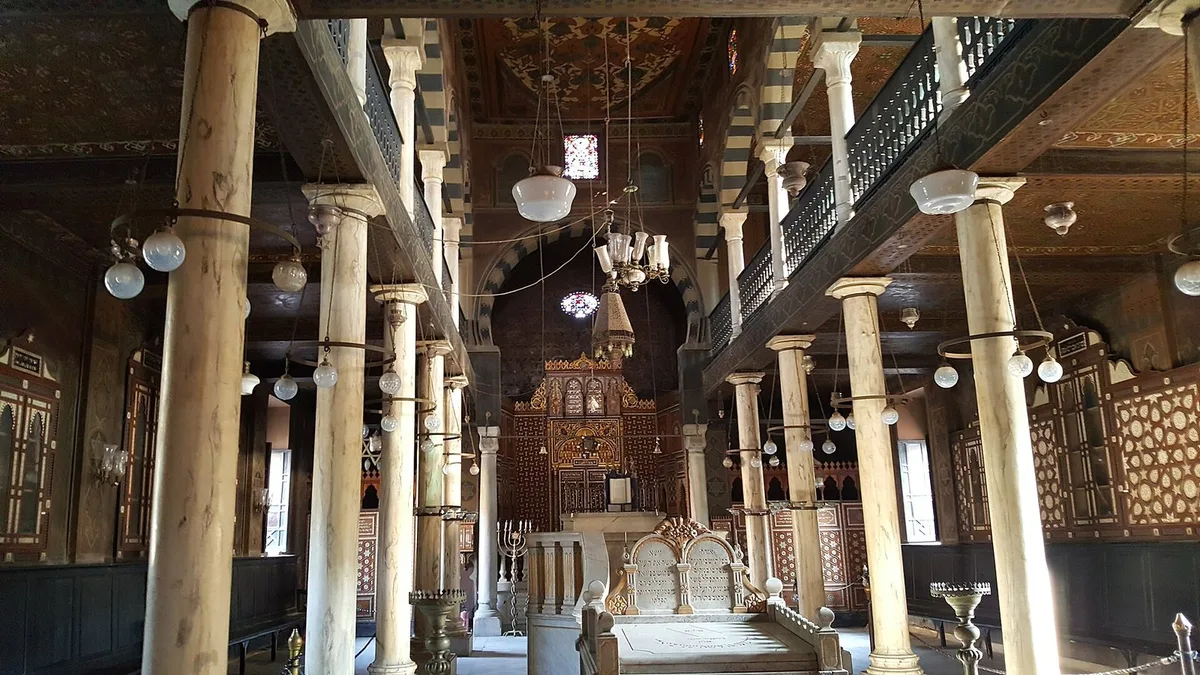
It no longer functions as an active place of prayer and now works as a museum and tourist site. The synagogue is where the Cairo Geniza documents, a large trove of medieval manuscripts, were discovered, and local tradition links the site to the finding of the infant Moses.
The Church of St Sergius (Abu Serga)
A short walk from the synagogue, the Church of Saints Sergius and Bacchus, known locally as Abu Serga, is dated to the 4th or 5th century. It stands over a crypt roughly 10 metres deep where tradition holds that the Holy Family rested during the flight into Egypt, and the descent into the crypt itself is one of the more memorable parts of a visit to the quarter.
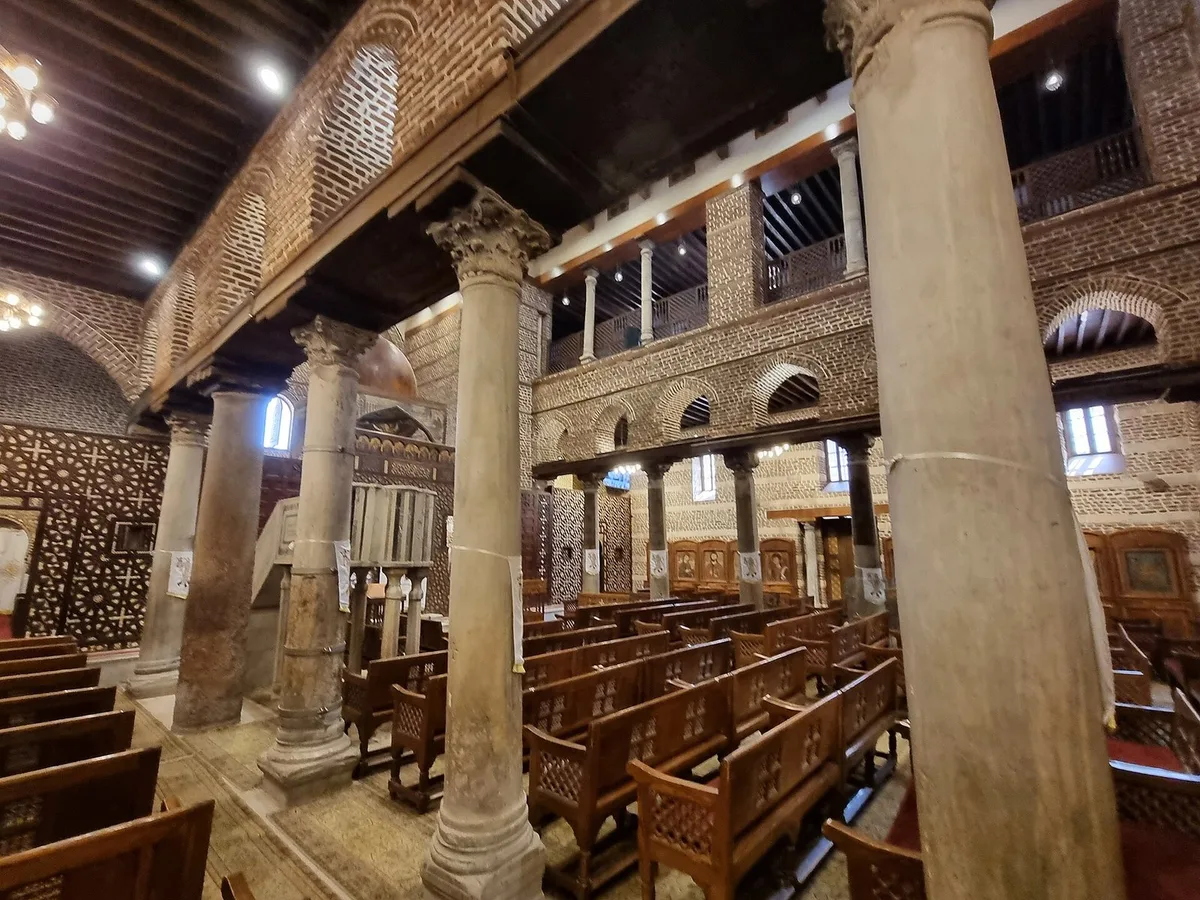
Nearby, the Church of St Barbara is a quieter stop on the same walk, worth a brief look for travellers who want to see the quarter's lesser-known churches rather than only the headline three. Entry to the churches and the synagogue is free throughout the quarter.
The Coptic Museum
The Coptic Museum stands within the Babylon Fortress walls next to the Hanging Church, at 3 Mari Gerges Street, and holds the largest collection of Coptic Christian artefacts in the world.
It opens daily from 9 am to 5 pm with the ticket window closing earlier, around 4 pm, and shorter hours during Ramadan, so arriving before the early afternoon avoids being turned away at the gate. Unlike the churches and the synagogue, the museum charges a separate ticket, and about 1.5 to 2 hours is enough to see its main galleries without rushing.
What to wear in Old Cairo churches
Shoulders and knees should be covered at every church and at the synagogue, a stricter standard than Cairo's streets generally require. Shoes stay on inside, which is different from mosque etiquette, and women may be asked to cover their hair in some prayer halls, so carrying a scarf is useful even if it is not needed everywhere.
The lanes in the quarter are cobbled and uneven. Closed comfortable shoes suit the compound better than sandals, and a light layer that still covers the shoulders helps on hot days, since the churches themselves are not air-conditioned even though the museum's galleries are.
Pairing Old Cairo with the Egyptian Museum in Tahrir Square
Old Cairo and the Egyptian Museum in Tahrir Square sit on the same metro line, about 10 minutes apart between Mar Girgis and Sadat stations, which makes combining them in one day straightforward. The Egyptian Museum opened in 1902 in its pink neoclassical building and holds over 100,000 artefacts, with last entry at 4 pm outside Ramadan (3 pm during it) and closing at 5 pm.
A practical order is the Coptic Quarter first, lunch somewhere Downtown, then the Egyptian Museum in the afternoon, allowing about 2 to 3 hours inside. Sadat station opens directly onto Tahrir Square, only a couple of minutes' walk from the museum entrance, so the connection between the two stops is simple even on a first visit.
Travellers building a longer Cairo stay sometimes ask whether Old Cairo fits better on its own day or alongside the pyramids. Because the Giza plateau and the Grand Egyptian Museum sit on the western side of the city, and Old Cairo sits on the eastern side near Downtown, splitting them across two separate days keeps each visit unhurried. Our Giza travel guide sets out how that western-side day works, with the pyramids and the Grand Egyptian Museum, while Old Cairo, the Egyptian Museum and Islamic Cairo sit naturally together on the other side of town.
Where this fits in a wider Cairo itinerary
For travellers with three or four days in the city, a visit to the Old Cairo Coptic Quarter works well alongside the Egyptian Museum, leaving the rest of the stay for Giza and Saqqara. A 4 day Cairo tour with Panda Travel Egypt runs on this kind of split, with the Giza Pyramids, Sphinx and Grand Egyptian Museum on one day and the royal mummies at the National Museum of Egyptian Civilization, Old Cairo's churches and the Citadel on another, each with a guide and private transport. Travellers planning their own route through the old Cairo Coptic quarter and the rest of the city can use the same split: western Cairo for the pyramids and the museum, eastern Cairo for Old Cairo, the Egyptian Museum and Islamic Cairo.
Travellers who want this built into a wider Cairo stay can ask our Egypt tour operator team, Panda Travel Egypt, how the Coptic Quarter sits alongside Giza, Saqqara and the Egyptian Museum within a three or four day plan.
Cover photo: Ovedc / Wikimedia Commons, CC BY-SA 4.0
Sources
Plan Discover Cairo Like Never Before
Tell us your dates and who is travelling. We reply with the programme day by day, and its price.
Frequently asked
What is the Old Cairo Coptic Quarter?
The Old Cairo Coptic Quarter, also called Coptic Cairo, is a walled cluster of early Christian sites built in and around the Roman fortress of Babylon, sometimes known as the Religions Complex or Majma al-Adyan area of Old Cairo. It takes in the Hanging Church, Ben Ezra Synagogue, the Church of St Sergius, the Greek Church of St George and the Coptic Museum, and it predates the Fatimid founding of Cairo in 969 AD.
How long does a Coptic Cairo walking tour take?
Allow about 1.5 to 2 hours for the Coptic Museum alone, plus further time for the Hanging Church, Ben Ezra Synagogue and the Church of St Sergius. The main sites sit within roughly a 10-minute walk of one another inside the Babylon Fortress, so little time is lost moving between them.
Can I visit Old Cairo and the Egyptian Museum on the same day?
Yes. Both sit on the same metro line, about 10 minutes apart between Mar Girgis and Sadat stations. A practical plan is the Coptic Quarter in the morning, lunch, then the Egyptian Museum in Tahrir Square in the afternoon, since it needs about 2 to 3 hours and its last entry is in the afternoon.
What should I wear to visit the churches in Old Cairo?
Cover your shoulders and knees for the churches and the synagogue. Shoes stay on inside, unlike at mosques, and women may be asked to cover their hair in some prayer halls. The lanes are cobbled and uneven, so closed, comfortable shoes work better than sandals.
Is the Coptic Museum worth the extra ticket?
It is a good use of time for anyone with a couple of hours to spare. It holds the largest collection of Coptic Christian artefacts anywhere, stands inside the Babylon Fortress next to the Hanging Church, and needs its own ticket separate from the free entry to the churches and synagogue. Plan for about 1.5 to 2 hours inside its air-conditioned galleries.
Is Ben Ezra Synagogue still used for prayer?
No. The present building dates from 1892 and now works as a museum and tourist site rather than an active synagogue. It stands directly behind the Hanging Church and is linked to the discovery of the Cairo Geniza documents and, by tradition, to the finding of the infant Moses.
Places in this article
Tours for this trip
Where to stay


Read next
- Khan El Khalili Bazaar Guide: Walking Islamic Cairo in Order A local operator's walking order through Islamic Cairo: Al Muizz Street, its mosques and madrasas, and Khan El
- Saqqara and Dahshur: A Local Operator's Day Trip Order A local operator's order of visits for Saqqara and Dahshur, with realistic timings, drive distances and what t
- Grand Egyptian Museum Tickets and Tips: A Visit Plan That Works A practical plan for Grand Egyptian Museum tickets, gallery order, timing and how it fits with a Giza pyramids
- Giza Pyramids Sunset Tour: When the Timing Actually Works Does a Giza pyramids sunset tour actually work? Here's the honest timing: when the plateau closes, when the su